Kathmandu to Soti Khola is the road journey that begins the Manaslu Circuit Trek. The distance is roughly 140 to 145 kilometers, but the drive takes seven to nine hours because most of the route is rough gravel. There is no airport nearby, so trekkers travel by road.
Soti Khola sits at around 700 to 730 meters in Gorkha district, beside the Budhi Gandaki River. It is a small riverside settlement, not a town. For many years, this was where the road ended and the walking began, which is exactly why it became the traditional trailhead.
Where Soti Khola Is and Why It Matters
The village lies north of Arughat Bazaar, following the Budhi Gandaki upstream towards the Tibetan border. At 700 metres, the altitude is subtropical, which surprises people expecting a Himalayan trek to start somewhere cold. The air is warm, the valley is green, and the river runs loud beside the lodges.
Soti Khola matters because it marks the boundary between road travel and foot travel. Everything beyond it moves by porter, mule, or human leg. That transition gives the place its character, even though only a handful of buildings line the riverbank.
Why the Road Keeps Moving North
Road construction in the Budhi Gandaki valley continues every year. The drivable surface has pushed past Soti Khola toward Lapubesi and Machha Khola, so many itineraries now start higher up. Each extension cuts roughly one walking day from the trek.
That means the answer to where the road ends changes season by season. After heavy monsoon rain, landslides can close sections and push the roadhead back down the valley. Your guide will know the current position on the day you travel, so confirm it before booking.
Which Vehicles Go from Kathmandu to Soti Khola
Three options cover almost everybody. Local bus, shared jeep, or private jeep. Each suits a different budget and tolerance for discomfort. All three follow the same route and take most of a day.
-
Local Bus from Machha Pokhari
Buses leave early in the morning, usually around six or seven, from Machha Pokhari bus park in Balaju or from Gongabu. The ride takes nine to ten hours, including a lunch stop. These are ordinary thirty-five-seater buses rather than tourist coaches, and they fill with local passengers, luggage, and sometimes livestock.
Buy your ticket a day in advance because buses on this route run once daily and sell out in trekking season. The bus is the cheapest option by a wide margin, though it is slow, crowded, and bumpy for the final stretch.
-
Shared Jeep from Balaju
Book shared jeeps in advance at Machha Pokhari bus park. You pay per seat rather than hiring the whole vehicle, and the jeep leaves once it fills. The journey takes seven to eight hours, noticeably faster than the bus.
This is the practical middle option for solo trekkers and small groups. You get Four Wheel Drive on the rough section without paying for an entire vehicle, and the seats are more comfortable than a bus bench.
-
Private Jeep for Groups
A private Four Wheel Drive Jeep, often a Toyota Hilux or similar, carries up to six or seven people with luggage. The drive takes seven to eight hours, and you control all the stops. You can pause for photographs, tea and lunch wherever you choose.
For a group of four or more, the cost per person becomes reasonable. Private jeeps also handle the post-Arughat section far better than any bus, which matters most during or just after monsoon.
Why Big Buses Stop at Arughat
Large coaches and buses cannot safely pass Arughat in poor conditions. The road beyond narrows, steepens and loses its surface. In bad weather, buses terminate at Arughat and passengers continue by local jeep or on foot.
Walking from Arughat to Soti Khola takes a day through farmland and villages. Some trekkers do this deliberately for the extra acclimatisation and the scenery. Most prefer to find onward transport and save the day.
How Much the Journey Costs
Costs shift with season and fuel prices, so treat these as rough guides. A local bus ticket costs roughly eight hundred to fifteen hundred Nepali rupees, about seven to twelve dollars per person.
A shared jeep seat costs considerably more, usually somewhere between twenty-five and forty dollars per person. A private jeep for the whole vehicle costs roughly $150 to $250, divided among however many people travel in it.
If you hire a private vehicle through a trekking agency rather than directly, expect to pay a little more. Agencies handle the booking, the driver, and any problems on the road, which many trekkers consider worth the difference.
What the Road Is Like Along the Way
The journey divides into three distinct sections, and each one feels completely different from the last. Knowing which part you are on helps enormously when the drive starts to feel long.
-
Prithvi Highway to Dhading Besi
The first stretch follows the Prithvi Highway, the main road connecting Kathmandu and Pokhara. This is a proper paved road, about as good as Nepal offers. Traffic leaving Kathmandu can be heavy, so starting early really helps.
The route passes Naubise and Malekhu before turning north at the Dhading junction. Tea shops and roadside restaurants line this section, so it's easy to arrange breakfast and toilet stops.
-
Dhading Besi to Arughat
After turning off the highway, the landscape becomes rural, and the road surface starts to deteriorate. Paved sections give way to mixed gravel. The hills steepen and the villages get smaller and further apart.
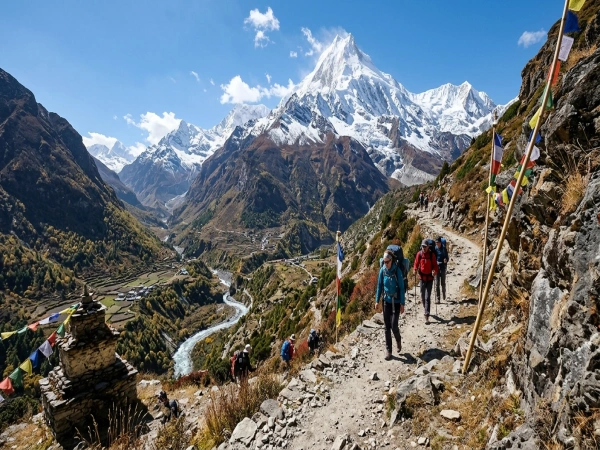
On clear days this section offers views of Annapurna, Manaslu, Ganesh Himal and Langtang. Those views are the compensation for the increasing discomfort, and they are genuinely worth looking up for.
-
Arughat to Soti Khola
Arughat Bazaar sits at around 520 to 570 meters and was once the traditional trek starting point. From here, the final ninety minutes to two hours is dusty, bumpy gravel following the Budhi Gandaki upstream.
This section requires Four Wheel Drive. In monsoon, it turns to mud, and landslides are common. Outside monsoon, it's rough and dusty, tolerable but tiring after an already long day.
What Weather to Expect in Soti Khola
At 700 meters, Soti Khola sits in the subtropical zone, so conditions are warm and humid rather than Himalayan. Many trekkers arrive sweating and surprised, having packed for cold mountains they will not meet for several days.
Temperatures Through the Year
Summer temperatures in this zone commonly reach the low thirties Celsius. Winter stays mild at around eight to thirteen degrees. Nights are cool but never freezing. You will not need a down jacket here, though a fleece is pleasant after dark.
Monsoon brings heavy rainfall between June and August, with the wider region receiving around 1,900 millimeters annually. Humidity rises sharply, and leeches appear in the forest sections just beyond the village.
Which Season Suits the Drive
Autumn, from September to November, offers the most reliable road conditions and the clearest views. Spring, from March to May, works nearly as well and adds rhododendron color to the hillsides.
Avoid the drive during heavy monsoon if possible. Landslides regularly close the Arughat section, and journeys that normally take eight hours can stretch into two days or stop entirely.
Where to Stay and What to Eat
Soti Khola is a trailhead rather than a destination, so expect simple accommodation. Most trekkers arrive late afternoon, eat, sleep and leave early the next morning.
Teahouses at the Trailhead
The village has roughly four teahouses and lodges. Rooms are basic twin arrangements with shared bathrooms. Electricity comes from micro hydro, and mobile network coverage reaches the village, though the signal can be patchy.
Hot showers are usually available for a small extra charge. Some lodges here are among the more comfortable on the route, simply because supplies still arrive by road rather than on someone’s back.
Food on the First Night
The food is traditional Nepali and Tibetan. Dal bhat dominates every menu and is the sensible choice, since it comes with free refills and is cooked fresh. Noodles, fried rice, momos and simple Western dishes also appear.
Because the village sits low and on the road, ingredients stay fresher and cheaper than anywhere higher. Eat well here. Prices climb steadily with every day of walking and variety narrows considerably above Jagat.
Who Lives in Soti Khola
Gurung and Magar families make up most of the local population, alongside other hill communities. They follow Hindu practices mixed with local traditions, which change noticeably as you walk north into Buddhist territory.
Houses and Village Life
Houses are built from stone with mud mortar, often with corrugated metal or slate roofing. Many sit on terraced ground above the river. Small shops, a few lodges and farming plots make up most of the settlement.
Farming and animal herding support households alongside income from trekkers. Terraced fields of maize, millet and rice climb the surrounding slopes. The valley has been a trading corridor between the hills and the high Himalaya for centuries.
Gurung and Magar Families
Gurung communities in this region have a strong military tradition through the Gurkha regiments, and many families have members who served. Magar families farm and herd, often on the same terraces for several generations.
People here are used to trekkers and genuinely welcoming without being pushy. A few words of Nepali go a long way. Namaste works everywhere, and dhanyabad (thank you) is always appreciated.
Final Tips Before Leaving Kathmandu
Carry enough cash in Nepali rupees, because there are no ATMs after Arughat and lodges do not accept cards. Sit on the left side of the vehicle for the better river views, and keep a scarf handy for the dust after Arughat.
Confirm with your guide where the road currently ends before you travel. If it has been extended past Soti Khola, you may be sleeping at Machha Khola instead and save yourself a day of walking.
FAQ 1: How long does the drive from Kathmandu take?
A: Seven to nine hours by jeep and nine to ten by local bus, covering roughly 140 to 145 kilometers. Monsoon rain can extend that considerably.
FAQ 2: Can a normal car reach Soti Khola?
A: Not reliably. The section after Arughat is rough gravel that needs Four Wheel Drive, particularly in wet conditions when the surface turns to mud.