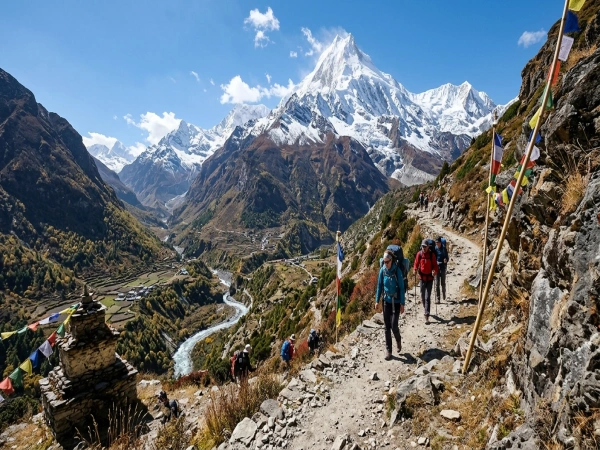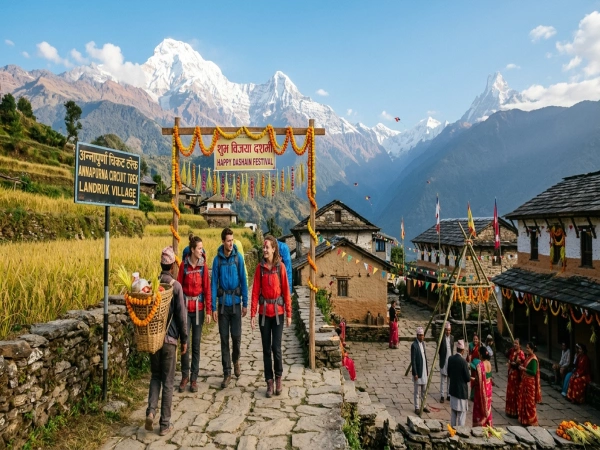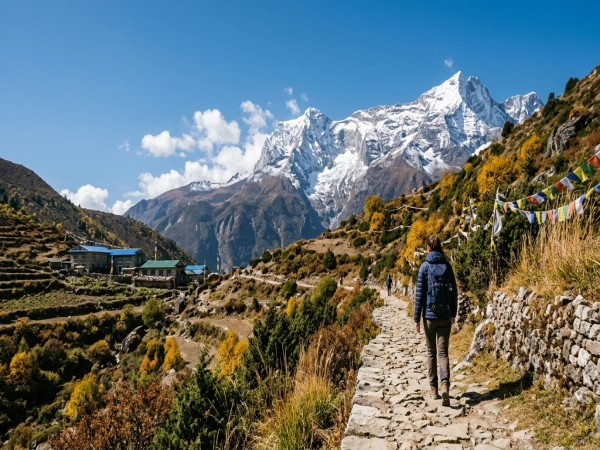


Thinking about trekking in Nepal for the first time? You do not need Himalayan trekking experience to enjoy Nepal’s trails. What matters more is choosing a route that matches your fitness, time, comfort with altitude and the kind of experience you want.
Nepal has trekking routes that range from short hill walks to high‑altitude crossings. For a trek it usually makes sense to start with a route that has manageable daily walking distances, good teahouse facilities, gradual altitude gain and easy access.
Some of the beginner‑friendly options include Ghorepani Poon Hill, Mardi Himal, Langtang Valley, Everest View Trek and lower‑altitude Annapurna routes. Each offers something, so the "best" trek depends on what you want to see and how much time you have.
Here is our guide to the treks in Nepal for beginners in 2026.
What Makes a Trek Good for Beginners?
A beginner‑friendly trek does not necessarily mean an easy walk. Nepal is even shorter routes can involve plenty of uphill and downhill walking.
For a trek look for:
- Moderate daily walking hours
- A manageable maximum altitude
- Gradual elevation gain
- Established teahouses or lodges along the route
- Easy access from Kathmandu or Pokhara
- Clearly marked and regularly used trails
- Opportunities to shorten or adjust the itinerary if needed
- Time for acclimatization on higher routes
It is also important to remember that altitude affects everyone differently. Being young or physically fit does not automatically prevent altitude sickness. A sensible itinerary and gradual ascent are more important than trying to walk quickly as possible.
1. Ghorepani Poon Hill Trek
Best for: First‑time trekkers, short holidays, mountain sunrise views
Duration: 3–5 days
Point: Poon Hill, 3,210 m
Region: Annapurna
If you have never trekked in Nepal before, the Ghorepani Poon Hill Trek is one of the easiest places to start.
The route combines mountain scenery with short trekking days and comfortable village stops.
The main highlight is the early‑morning hike to Poon Hill, where you can see the Annapurna and Dhaulagiri ranges as the sun rises.
The trail also passes through rhododendron forests and traditional Gurung and Magar villages.
Nepal Tourism Board describes Poon Hill as a short trek suitable for beginners and families with the viewpoint at 3,210 m.
Why beginners like Poon Hill
- Short itinerary
- Moderate altitude
- Good teahouse infrastructure
- Accessible from Pokhara
- Excellent mountain views
- No need for trekking experience
There are plenty of stairs on parts of the route so do not underestimate the physical side.. With reasonable preparation it is a very manageable introduction to trekking in Nepal.
2. Mardi Himal Trek
Best for: Beginners who want a mountainous experience
Typical duration: 5–7 days
Point: Around 4,500 m at Mardi Himal Base Camp
Region: Annapurna
The Mardi Himal Trek has become one of the popular short trekking routes in the Annapurna region.
Compared with Poon Hill Mardi Himal feels like a proper Himalayan trek.
The route moves from forested sections toward alpine landscapes and ridgeline trails with increasingly close views of Machhapuchhre and the Annapurna range.
However there is a distinction: Mardi Himal is beginner‑friendly but it is not an "easy" trek.
The altitude reaches around 4,500 m and the higher sections can be cold and physically demanding.
Nepal Tourism Board lists Mardi Himal among Nepals trekking destinations and notes that the route reaches Mardi Himal Base Camp at approximately 4,500 m.
Why choose Mardi Himal?
- Shorter compared with high‑altitude treks
- Excellent mountain views
- Less time commitment than EBC
- Teahouses along the route
- Good option for fit first‑time trekkers
If you want your first trek to feel like a genuine Himalayan adventure rather than a gentle hill walk Mardi Himal is worth considering.
3. Langtang Valley Trek
Best for: Beginners wanting culture, scenery and a longer trek
Duration: 7–9 days
Highest point: Around Kyanjin area, 3,800 m
Region: Langtang
The Langtang Valley Trek is a very easy Himalayan trek that you can do from Kathmandu.
The path starts after a drive toward Syabrubesi. Slowly moves into the Langtang Valley. On the way you see Tamang villages, forests, rivers and high mountain scenery before you reach Kyanjin Gompa.
The Nepal Tourism Board says Langtang is one of the trekking spots nearest Kathmandu and points out its mix of nature and Tamang culture.
Why Langtang works for beginners
- - Langtang is relatively close to Kathmandu
- - Langtang needs no domestic mountain flight
- - Langtang has a well‑established trekking route
- - Langtang offers a mix of culture and scenery
- - Langtang has moderate altitude compared with many famous Himalayan treks
- - Langtang provides several options for extra day hikes
Langtang is especially nice if you have a little more time and want something beyond a very short introductory trek.
4. Everest View Trek
Best for: Beginners who want Everest without trekking all the way to Base Camp
Duration: 6–8 days
Point: Around 3,880 m at the Everest View Hotel area
Region: Everest
You do not have to trek all the way to Everest Base Camp to see the Khumbu.
The Everest View Trek takes you through the Sherpa villages of the Everest region, including Namche Bazaar and lets you see Everest and the surrounding peaks.
It follows part of the Everest route but ends at a lower altitude than Everest Base Camp.
For first‑time trekkers who want the Everest experience but are not ready for a trek this can be a good alternative.
The Nepal Tourism Board says the Everest route usually starts from Lukla and that Namche Bazaar is an acclimatization point.
Why choose Everest View Trek?
- - Everest View Trek offers scenery of the Everest region
- - Everest View Trek shows Sherpa culture
- - Everest View Trek includes Namche Bazaar
- - Everest View Trek is shorter than Everest Base Camp
- - Everest View Trek has a lower maximum altitude than EBC
- - Everest View Trek suits travelers with limited trekking time
Keep in mind that the trail still has many uphill and downhill parts. The shorter schedule does not mean the trek is easy.
5. Annapurna Base Camp Trek
Best for: Fit beginners who want a bigger Himalayan goal
Typical duration: 7–10 days
Highest point: 4,130 m
Region: Annapurna
If you are reasonably fit and want your first trek to be more ambitious Annapurna Base Camp (ABC) can be your choice.
The trail brings you into the Annapurna Sanctuary surrounded by Himalayan peaks. The route mixes villages, forests, stone steps and dramatic mountain scenery.
The Nepal Tourism Board lists Annapurna Base Camp at 4,130 m. Points out the nearby Annapurna I, Machhapuchhre and Hiunchuli peaks.
ABC is more demanding than Poon Hill or a short lower‑altitude trek. The height and repeated stairs mean you should prepare well.
Is ABC suitable for a first-time trekker?
Yes—if you are reasonably fit. Follow a sensible itinerary.
You do not need trekking experience but you should be comfortable walking several hours a day for many consecutive days.
6. Lower Mustang Trek
Best for: Beginners interested in landscapes and culture
Typical duration: 5–8 days
Region: Mustang
Lower Mustang offers something very different from the forested Annapurna routes.
The landscape becomes more Tibetan‑like as you move toward places such as Jomsom and Marpha. You can combine trekking with road or flight access making it possible to make an itinerary.
This is a choice if your main interest is mountain culture, traditional villages and dramatic landscapes rather than spending two weeks at high altitude.
The exact difficulty depends a lot on the itinerary you pick so we recommend choosing the route based on your walking experience. The time you have.
7. Everest Base Camp Trek
Best for: Beginners with good fitness and a strong interest in high-altitude trekking
Typical duration: 12–16 days
Highest point: Kala Patthar, around 5,545 m, on many itineraries
Region: Everest
Yes first‑time trekkers can finish the Everest Base Camp Trek.
I think we do not place EBC in the category as Poon Hill or a simple short trek.
The main challenge is not climbing. It is altitude, duration and the number of walking days.
The standard route includes acclimatization around Namche Bazaar. Continues through the Khumbu Valley toward Everest Base Camp.
The Nepal Tourism Board describes the trek as roughly a two-week journey from Lukla and emphasizes the importance of taking time to acclimatize around Namche.
Can a beginner do EBC?
Absolutely provided you:
- Prepare physically before the trek
- Allow days for acclimatization
- Walk at a pace
- Stay hydrated
- Listen to your guide and body
- Do not rush the itinerary
For a first-time trekker with limited mountain experience choosing a reputable trekking agency and an appropriate itinerary can make a major difference.
Beginner Trek Comparison
| Trek | Approx. Days | Difficulty | Highest Point | Best For |
| Ghorepani Poon Hill | 3–5 | Easy–Moderate | 3,210 m | First‑time trekkers |
| Mardi Himal | 5–7 | Moderate | ~4,500 m | Mountain views |
| Langtang Valley | 7–9 | Moderate | ~3,800 m | Culture & scenery |
| Everest View | 6–8 | Moderate | ~3,880 m | Everest views |
| Annapurna Base Camp | 7–10 | Moderate | 4,130 m | Fit beginners |
| Lower Mustang | 5–8 | Easy–Moderate | Varies | Culture & landscapes |
| Everest Base Camp | 12–16 | Moderate–Challenging | ~5,545 m* | First major Himalayan trek |
*Difficulty and altitude depend on the itinerary and side trips.
Which Trek Should You Choose?
The right trek depends on what you want from your experience.
If you only have 3–5 days
Choose Ghorepani Poon Hill.
It gives you a Himalayan trekking experience without requiring two weeks away from your normal schedule.
If you want dramatic mountain scenery
Choose Mardi Himal.
The higher trail provides views of Machhapuchhre and the Annapurna range.
If you want culture and nature
Choose Langtang Valley.
The route offers Tamang villages, forests, mountain scenery and a gradual Himalayan experience.
If Everest is your priority
Choose Everest View Trek if you want a trip or Everest Base Camp if you are prepared for a longer and more demanding trek.
If you're already physically active
Consider Annapurna Base Camp or Mardi Himal depending on your available time and comfort with altitude.
Best Time for Beginner Treks in Nepal
For trekking routes, spring and autumn are the most reliable seasons.
The Nepal Tourism Board recommends September–November and February–May as the periods for trekking, when daytime weather is generally favorable.
Spring: March to May
Spring brings temperatures and blooming rhododendrons, particularly on routes in the Annapurna and Langtang regions.
Autumn: September to November
Autumn generally brings mountain views and comfortable trekking conditions. October and November are particularly popular.
Winter: December to February
Lower‑altitude routes such as Poon Hill can still be possible. Higher trails can become significantly colder and may receive snow.
Monsoon: June to August
Rain, slippery trails, clouds and leeches can make many trekking routes less appealing. Routes in rain‑shadow areas such as Mustang can be considered instead.
Do Beginners Need a Guide in Nepal?
The requirements depend on the trekking route.
The Nepals current TIMS guidance requires trekkers on major routes to be accompanied by a licensed trekking guide and to carry a trekking‑agency‑issued TIMS card. The listed routes include Everest View, Langtang, Annapurna Circuit, Poon Hill‑ABC and Mardi Himal among others.
For beginners having a guide is useful beyond the permit requirement. A good guide can help with pacing, accommodation, route decisions, altitude concerns and communication, with teahouses.
Before booking your trek always check the permit and TIMS requirements for your exact route.
What Should Beginners Pack for a Nepal Trek?
You do not need to carry your wardrobe into the Himalayas. I remember packing light and feeling free.
A practical packing list usually includes:
- * trekking shoes
- * Trekking trousers
- * Moisture‑wicking T‑shirts
- * Warm fleece or mid‑layer
- * Down or insulated jacket
- * Waterproof jacket
- * Hat and gloves
- * Sunglasses
- * Sunscreen
- * Reusable water bottle
- * Water purification tablets or a filtration method
- * Headlamp
- * Basic first‑aid supplies
- * Personal medications
- * Trekking poles
- * Sleeping bag for the season
- * Small daypack
- * Duffel bag if your trekking agency provides porter support
Pack according to the season and route. A beginner trekking at Poon Hill in spring does not need the same gear as someone trekking to Everest Base Camp in late autumn.
How Should Beginners Prepare for Their First Trek?
You do not need to become an athlete before coming to Nepal.
Start preparing **4–8 weeks before your trek** if possible.
Focus on:
Walking
Begin with walks and gradually increase the distance. I have found that walking a miles each day builds confidence.
Stairs
Stair climbing is useful because many Nepal trekking routes involve repeated climbs and descents.
Leg strength
Squats, lunges and step‑ups can help prepare your legs.
Cardio
Walking uphill, cycling, jogging or other aerobic exercise can improve your endurance.
Practice with a backpack
Do a training walks while carrying a light backpack similar to what you expect to carry on the trek.
The goal is not to finish your training walks quickly as possible. The goal is to become comfortable moving for hours without exhausting yourself.
How Difficult Is Trekking in Nepal for a Beginner?
That depends on the route.
A first‑time trekker with fitness can comfortably complete several of Nepals shorter trekking routes.. Even beginner‑friendly routes can involve steep stairs, uneven terrain, long walking days and changes in altitude. I have walked routes and found that the real challenge is staying consistent.
The biggest mistake is choosing a trek based on photographs.
Instead consider:
How days can I walk?
How many hours can I comfortably walk each day?
How do I handle altitude?
How time do I have to acclimatize?
What level of accommodation am I comfortable with?
These questions will help you choose a route that you actually enjoy than simply trying to complete the most famous trek.
Final Thoughts
Your first trek in Nepal does not have to be Everest Base Camp. I think the best trek is the one that feels right for you.
For some travelers Poon Hill is the introduction. Others may prefer the trails of Mardi Himal, the cultural experience of Langtang or the iconic landscapes of the Everest region.
The best beginner trek is ultimately the one that matches your fitness, time, budget and expectations.
If you are unsure which route is right for you Nepal Horizons Treks can help you compare the options and build an itinerary around your travel dates and experience level.
FAQs
What is the trek in Nepal for beginners?
Ghorepani Poon Hill is one of the accessible trekking options for beginners. It has a short itinerary, established teahouses and a moderate maximum altitude.
Can I trek in Nepal without trekking experience?
Yes. Many Nepal trekking routes are suitable for first‑time trekkers. Your fitness, preparation and choice of itinerary are more important than trekking experience.
Is Mardi Himal good for beginners?
Yes, for fit beginners. However Mardi Himal reaches a higher altitude than Poon Hill so it should not be treated as an easy low‑altitude trek.
Can beginners do Everest Base Camp?
Yes. Beginners can complete EBC with preparation, a gradual itinerary, acclimatization days and appropriate support. It is more demanding than short beginner treks.
Which beginner trek is closest to Kathmandu?
Langtang is one of the trekking destinations closest to Kathmandu with road access, toward the trailhead.
What is the month for a beginner trek in Nepal?
October, November March and April are among the most popular months for a beginner trek in Nepal. The Nepal Tourism Board recommends September–November and February–May as the trekking periods. These months normally bring skies, mild temperatures and good trail conditions for a beginner trek.
Do I need a guide for trekking in Nepal?
Many major trekking routes in Nepal now require trekkers to travel with a guide and to hold a TIMS card that is arranged through a trekking agency. The rules differ from one route to another so a beginner trek must check the requirements before setting off.
How fit do I need to be, for a beginner trek?
A beginner trek needs you to be comfortable walking for hours each day and to manage uphill and downhill sections. You can boost your trekking fitness by walking climbing stairs doing cardio and strengthening your legs before the trip.