Thinking about trekking around Mount Manaslu? Here's what you actually need to know before you go.
The Manaslu Circuit Trek is one of those Himalayan journeys where the scenery changes almost every day.
You begin in the lower Budhi Gandaki Valley, surrounded by green hills, rivers and subtropical vegetation. A few days later, the landscape is completely different: forests give way to high mountain villages, Buddhist prayer flags and stone houses. Eventually, the trail takes you above 4,000 metres and toward the crossing of Larkya La Pass, before descending into the Marsyangdi Valley.
That variety is one of the main reasons trekkers choose Manaslu.
But planning the trek can raise plenty of questions.
When should you go? Where does the trek actually start? How difficult is Larkya La? What are the roads like? Do you need a guide? What kind of accommodation can you expect? And how much should you actually pack?
At Nepal Horizons Treks, these are some of the practical questions trekkers ask before heading into the Manaslu region. So rather than simply giving you a day-by-day itinerary, this guide focuses on what you should know before committing to the trek.
Manaslu Circuit Trek at a Glance
- Region: Manaslu, Gorkha
- Highest point: Larkya La Pass, approximately 5,100 metres
- Main valley: Budhi Gandaki Valley
- Highest mountain: Mount Manaslu, 8,163 metres
- Main trekking seasons: March–May and September–November
- Typical duration: Around 12–16 days, depending on the itinerary
- Accommodation: Mainly teahouses and lodges
- Trek difficulty: Challenging
- Guide: Required under Nepal's current trekking regulations for the Manaslu route
- Special permit: Required for the restricted Manaslu area
- Major highlights: Namrung, Lho, Samagaun, Manaslu Base Camp, Samdo and Larkya La
The Nepal Tourism Board currently lists March–May and September–November as the main trekking seasons for the Manaslu Conservation Area.
Where Is the Manaslu Circuit?
Mount Manaslu stands at 8,163 metres, making it the eighth-highest mountain in the world.
The trekking route travels through the Manaslu Conservation Area and follows much of the Budhi Gandaki Valley before climbing toward the high Himalayan settlements of the Nubri Valley.
One of the interesting things about the Manaslu Circuit is how quickly the environment changes.
The lower part of the trek feels very different from the upper section. You start among warmer valleys and forests and gradually move into a much colder, drier alpine environment.
The Manaslu Conservation Area itself contains a wide range of ecosystems, wildlife and vegetation, with elevations ranging from the lower valleys to the high mountains.
So if you're expecting the entire trek to look like the photographs of snowy mountains you see online, don't be surprised when your first few days look completely different.
That's part of the experience.
When Is the Best Time to Trek the Manaslu Circuit?
For most trekkers, spring and autumn are the most practical seasons.
The Nepal Tourism Board currently identifies March to May and September to November as the best seasons for the Manaslu Conservation Area.
Spring: March to May
Spring brings warmer conditions in the lower sections and colourful vegetation, including rhododendrons.
March can still feel very cold at higher elevations, particularly once you approach Samdo and Larkya La.
April and May generally offer a good combination of:
- Comfortable daytime trekking conditions
- Clear mountain views on suitable days
- Spring vegetation
- Longer daylight hours
- More manageable conditions around the high-altitude sections
Autumn: September to November
Autumn is another popular window.
After the monsoon, the mountain air often becomes clearer and the views can be excellent. October and November are particularly popular trekking months.
The trade-off is that accommodation and trekking services can be busier than during quieter periods.
What About June to August?
The monsoon affects the lower Manaslu region considerably.
Rain can bring:
- Muddy trails
- Landslides
- Slippery sections
- Increased river levels
- Road disruptions
- Cloudy mountain views
The road journey to and from the trailhead is particularly important to consider because road conditions can change quickly during periods of heavy rainfall.
Can You Trek in Winter?
Winter trekking is possible, but it requires more preparation.
Snow and freezing temperatures become much more important at higher elevations, and conditions around Larkya La need to be assessed carefully.
If you're planning a winter trek, your itinerary should be built around the actual conditions rather than simply following a standard autumn itinerary.
How Do You Start the Manaslu Circuit Trek?
This is one of the first things people get confused about.
The Manaslu Circuit isn't a trek where you simply arrive at a famous mountain airport and start walking.
The journey begins with an overland drive from Kathmandu toward the Gorkha/Manaslu region. The exact roadhead used by trekkers can vary depending on current road conditions and the itinerary.
Machha Khola is commonly used as a starting point for the walking section, while some itineraries may begin from an earlier roadhead.
A typical route looks something like:
Kathmandu → Machha Khola → Jagat → Deng → Namrung → Lho → Samagaun → Samdo → Dharamsala → Larkya La → Bhimthang → Dharapani
From Dharapani, the route connects with the road network of the Marsyangdi Valley.
Because roads continue to develop in the region, the exact point where your vehicle drops you off can change. This is something your trekking agency should confirm shortly before departure rather than something you should assume from an old itinerary.
The Nepal Tourism Board currently lists road access into the broader Manaslu area via routes through Dhading or Besisahar before continuing into the trekking region.
What Is the Transportation Like?
Let's be realistic about this part: the drive to the Manaslu trailhead is not usually the highlight of the trip.
Road conditions vary, and some sections can be rough and slow.
Depending on your group and itinerary, transportation can include:
- Public bus
- Shared jeep
- Private jeep
- Private vehicle
For trekking groups, private or shared jeeps are often more practical because they provide greater flexibility when road conditions or arrival times change.
Don't plan an important activity immediately after reaching the trailhead. A road journey in the mountains can take longer than expected.
Weather, traffic, construction and road conditions can all affect travel time.
Do You Need a Permit and Guide for the Manaslu Circuit?
Yes.
Manaslu is not a route where international visitors can simply turn up and trek independently without the required arrangements.
The Nepal Tourism Board identifies Manaslu as a restricted trekking area and states that trekkers need the appropriate special trekking permit.
Current government information also lists Gorkha Manaslu under the restricted-area trekking permit system.
The current TIMS and guide requirements should also be confirmed before departure, as trekking regulations can be updated.
What about the permit fee?
This is one area where I would recommend not copying an old blog's fee into your article.
The Department of Immigration's current online pages display different figures for the Manaslu permit depending on the page being viewed.
For that reason, Nepal Horizons should verify the current applicable fee directly before publishing a specific dollar amount.
That is better for your SEO credibility than publishing a number that may already be outdated.
The Manaslu Circuit Route: What to Expect
One of the best ways to understand the trek is to think about it in sections.
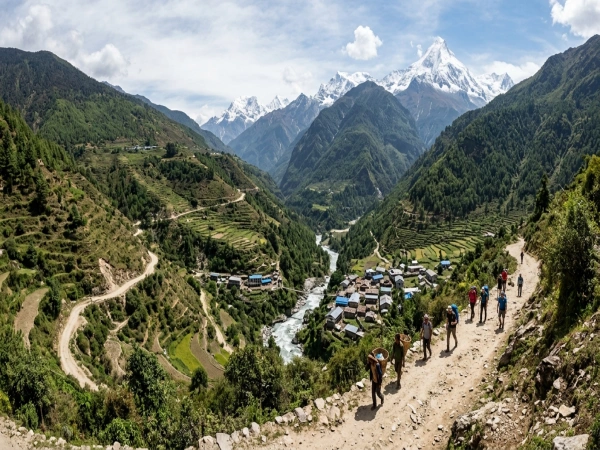
The lower Budhi Gandaki Valley is greener and warmer. The middle section brings forests, dramatic gorges and traditional villages. Then the trail reaches the higher Nubri Valley, where Buddhist culture becomes increasingly visible and the landscape becomes much more alpine.
Finally comes the Larkya La crossing and the descent toward Dharapani.
Let's look at some of the places that make the route special.
Machha Khola
Machha Khola is one of the most common starting points for the Manaslu Circuit today.
Don't expect the landscape here to resemble the high Himalaya yet.
The valley is warmer, greener and much more humid than the upper sections of the trek.
You will encounter:
- River valleys
- Forest
- Suspension bridges
- Small settlements
- Terraced hillsides
- Waterfalls and streams
It's a good reminder that the Manaslu Circuit is not a high-altitude trek from day one. You gradually earn your way into the mountains.
Jagat
Jagat is an important settlement and checkpoint along the route.
It is also associated with the entrance to the Manaslu Conservation Area. The National Trust for Nature Conservation identifies Jagat in Sirdibas as the main entrance to the conservation area.
The character of the trail begins to change around this part of the route.
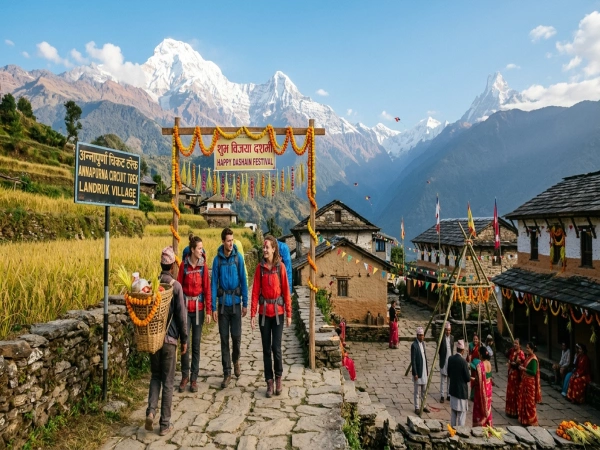
You'll see more traditional stone construction, mountain pathways and Buddhist cultural features as you move north.
Deng
By the time you reach Deng, the Budhi Gandaki Valley has begun to feel much more enclosed by the surrounding mountains.
The trail moves through forest, along the river and across suspension bridges.
This is also where the cultural transition becomes increasingly noticeable.
The further north you travel, the stronger the Tibetan influence becomes in architecture, religious features and village life.
Namrung
Namrung is one of the more memorable stops on the Manaslu Circuit.
The altitude is now significantly higher, the air is cooler and the mountains begin to dominate the landscape.
This is also where many trekkers really start feeling that they are entering the high Himalayan environment.
In September 2026, Nepal Tourism Board reported that previously damaged structures along the route near Namrung had been restored and that an earlier trekking restriction in the affected section had been lifted. The Board still advises travelers to monitor local conditions before travelling.
That's worth remembering: conditions in the Himalaya can change, even when an itinerary looks straightforward on paper.
Lho
Lho is one of the villages where the Manaslu landscape really starts to look like the photographs you've probably seen while researching the trek.
Traditional buildings, Buddhist features and dramatic mountain views come together here.
The village also provides a strong introduction to the culture of the Nubri Valley.
Take some time to walk rather than treating the village as simply another overnight stop.
Samagaun
If there is one village where you should avoid rushing, it's Samagaun.
At roughly 3,500 metres, Samagaun is one of the major settlements of the upper Manaslu region and is commonly used for acclimatization.
Rather than spending the entire day inside your teahouse, you can use the acclimatization day to explore nearby areas, depending on your itinerary and physical condition.
Possible excursions include:
- Birendra Lake
- Local monasteries
- Village walks
- Higher viewpoints
- Manaslu Base Camp
The important thing is that an acclimatization day isn't a wasted day.
It is part of the trek.
Manaslu Base Camp
Manaslu Base Camp is generally visited as an excursion rather than being part of the standard overnight route.
From the Samagaun area, the landscape becomes much more rugged, with glaciers, rocky slopes and increasingly dramatic views of the mountain.
Whether you should make the hike depends on your acclimatization, weather, trail conditions and overall itinerary.
Your guide should make that decision with you rather than treating the excursion as mandatory.
Samdo
From Samagaun, the trail climbs further toward Samdo.
This is where the altitude starts becoming something you need to take seriously.
The village sits at nearly 4,000 metres, and temperatures can drop sharply once the sun disappears.
At this stage, don't judge your fitness by how you felt in Kathmandu or during the first few days.
Altitude changes the equation.
Walk slowly, stay hydrated, eat properly and communicate with your guide if you develop symptoms such as persistent headache, nausea, dizziness or unusual fatigue.
Dharamsala / Larkya Phedi
Dharamsala, also known as Larkya Phedi, is the staging point before the Larkya La crossing.
This is one of the simplest accommodation stops on the trek, and that is exactly why trekkers should prepare for it.
It's cold.
Facilities are basic.
And most people are thinking about the following day's pass crossing.
Your goal here isn't comfort. It's to eat, rest, stay warm and prepare for an early start.
Crossing Larkya La Pass
This is the day most trekkers think about before starting the Manaslu Circuit.
Larkya La rises to just over 5,100 metres, making it the highest point of the circuit.
The crossing can be long and physically demanding.
Depending on conditions, you may encounter:
- Snow
- Ice
- Strong winds
- Freezing temperatures
- Steep climbs
- Rocky terrain
- Reduced oxygen
The pass is also one of the reasons acclimatization matters so much.
Don't look at the distance alone and assume it will be easy. Walking at 5,000 metres is very different from walking the same distance at lower altitude.
An early start is normally important because weather and visibility can change as the day progresses.
And once you've crossed the pass, there's still a substantial descent ahead.
Bhimthang and the Descent
Reaching Bhimthang after Larkya La feels different from almost every other part of the trek.
You've crossed the highest point and begin descending toward greener landscapes.
The environment gradually becomes less severe, vegetation returns and the air feels different.
For many trekkers, this section provides a welcome psychological shift: the hardest high-altitude part is behind you.
Dharapani
Dharapani marks the end of the classic Manaslu Circuit trekking section for many itineraries.
From here, road transportation connects the area toward Besisahar and the wider Marsyangdi Valley.
Dharapani also sits within the wider Annapurna trekking network, which means the landscape and trekking environment begin to feel noticeably different.
Culture and Local Life Along the Manaslu Circuit
One of the strongest reasons to choose Manaslu is that the trek isn't only about mountains.
The communities along the route have their own traditions, architecture, religious practices and ways of life.
As you travel higher into the Nubri Valley, you'll notice stronger Tibetan Buddhist influences through:
- Prayer flags
- Mani walls
- Chortens
- Prayer wheels
- Monasteries
- Stone houses
- Traditional village layouts
The Manaslu Conservation Area is also known for significant biodiversity, with the Nepal Tourism Board listing species such as snow leopard, musk deer and Himalayan tahr among its wildlife, along with more than 100 bird species.
For visitors, the important thing is to remember that these villages aren't simply trekking attractions.
Ask before photographing people or religious ceremonies, don't disturb religious objects and respect local customs.
What Is Accommodation Like on the Manaslu Circuit?
The Manaslu Circuit is primarily a teahouse and lodge trek.
That doesn't mean every teahouse will have the same facilities.
In the lower sections, you may find relatively comfortable rooms and a wider selection of food.
As you climb, facilities become simpler.
Depending on the village, you may have:
- Twin-sharing rooms
- Shared bathrooms
- Hot showers
- Dining rooms
- Electricity
- Charging facilities
- Wi-Fi or mobile connectivity
But don't expect these services to be equally reliable everywhere.
At higher elevations, the priority is basic shelter, food and warmth.
If you are used to hotels in Kathmandu, adjust your expectations before heading into the upper Manaslu region.
What Food Can You Expect?
The classic trekking meal remains dal bhat, and for good reason.
It's filling, familiar and useful after a long day of walking.
You can also find dishes such as:
- Momos
- Noodles
- Fried rice
- Soups
- Pasta
- Eggs
- Potatoes
- Tibetan bread
- Porridge
- Tea
- Coffee
Food choices become more limited as you climb because everything has to be transported into the mountains.
This is another reason why keeping your meals simple is often the practical choice.
What Should You Pack for the Manaslu Circuit?
Don't make the mistake of packing for Kathmandu and assuming the same clothing will work at 5,000 metres.
You need to prepare for several different climates.
Clothing
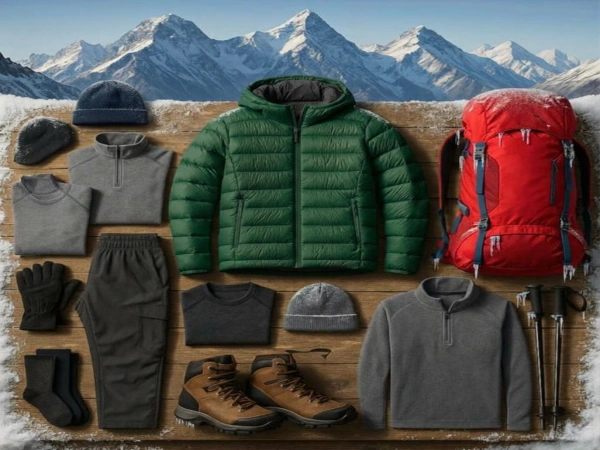
Bring a layering system consisting of:
- Trekking T-shirts
- Base layers
- Fleece
- Down or insulated jacket
- Waterproof jacket
- Trekking trousers
- Thermal trousers
- Warm socks
- Gloves
- Warm hat
- Sun hat
- Buff
You don't necessarily need ten different outfits.
You need layers that you can add or remove as the temperature changes.
Footwear
A good pair of broken-in trekking boots is essential.
Also consider:
- Trekking socks
- Camp shoes/sandals
- Gaiters if required for the season
- Do not start the trek with brand-new boots.
A blister that seems minor on day one becomes a much bigger problem several days into a mountain trek.
Trekking Gear
Useful equipment includes:
- Backpack
- Duffel bag
- Daypack
- Sleeping bag
- Trekking poles
- Headlamp
- Water bottles/hydration system
- Rain cover
- Dry bags
Sun Protection
At altitude, sun exposure can be surprisingly strong.
Carry:
- Sunglasses
- Sunscreen
- SPF lip balm
- Sun hat
- Buff
Personal Essentials
Pack:
- Personal medication
- Basic first-aid supplies
- Blister treatment
- Toiletries
- Hand sanitizer
- Wet wipes
- Toilet paper
- Water purification method
- Small towel
Electronics
Depending on your needs:
- Phone
- Camera
- Power bank
- Spare batteries
- Charging cables
- Universal adapter
Don't rely on being able to charge everything whenever you want.
How Difficult Is the Manaslu Circuit?
Manaslu is a challenging trek, but the difficulty isn't just about walking distance.
What makes it demanding is the combination of:
altitude + consecutive trekking days + terrain + weather + Larkya La + remote accommodation.
You don't need to be an elite athlete.
But you should be comfortable walking for several hours a day on consecutive days and be prepared for steep ascents and descents.
A few weeks before your trek, start building endurance through:
- Long walks
- Stair climbing
- Incline treadmill walking
- Hiking
- Squats
- Lunges
- Step-ups
- Core exercises
If you're carrying your own daypack, practice with it before leaving.
You don't want to discover on day three that your backpack is uncomfortable.
Things First-Time Manaslu Trekkers Often Underestimate
The road journey
The trek doesn't begin the moment you leave Kathmandu. The drive to the trailhead can be tiring, and road conditions can change.
The cold
The lower valley may feel warm when you begin. That doesn't mean you can pack lightly for the upper section.
The altitude
Feeling fit in the gym doesn't automatically mean you'll feel good above 4,000 metres.
The Larkya La crossing
The pass is only one day, but the entire approach matters. You need to arrive there properly acclimatized and rested.
The accommodation
Teahouses are practical, but don't expect hotel-style facilities at high altitude.
Road and weather changes
Your itinerary should have some flexibility. Mountain travel doesn't always follow a perfect timetable.
Is the Manaslu Circuit Safe?
Like any high-altitude Himalayan trek, Manaslu requires preparation.
The main risks include:
- Altitude sickness
- Cold exposure
- Weather changes
- Landslides
- Road disruptions
- Falls and difficult terrain
- Fatigue
- Limited medical access
The Nepal Tourism Board currently advises travelers to monitor local conditions in the Manaslu region. A September 2026 update confirmed that a previously affected section near Namrung had been restored and the temporary trekking restriction lifted.
This is exactly why we recommend checking the latest trail situation before departure instead of relying on information from an old itinerary or social media post.
Why Choose the Manaslu Circuit?
If you want a trek where the scenery stays the same from beginning to end, Manaslu probably isn't that trek.
And that's precisely what makes it interesting.
Over the course of the journey, you move through dramatically different environments:
green river valleys → forests → mountain villages → Tibetan-influenced settlements → alpine terrain → glaciers → Larkya La → high mountain meadows → Marsyangdi Valley
The cultural transition is just as noticeable as the geographical one.
You aren't simply walking toward a mountain.
You're travelling through a region where the landscape, climate, architecture and local way of life change as you climb.
Frequently Asked Questions
How long does the Manaslu Circuit Trek take?
Most itineraries take around 12–16 days, although the exact duration depends on the starting point, acclimatization days, transportation and itinerary design.
What is the highest point of the Manaslu Circuit?
The highest point is Larkya La Pass, at just over 5,100 metres.
Can I trek the Manaslu Circuit independently?
The Manaslu region is regulated as a restricted trekking area. Current regulations require the appropriate permits and trekking arrangements, including a licensed guide under the applicable trekking rules.
What is the best month for Manaslu?
April, May, October and November fall within the main spring and autumn trekking seasons. The Nepal Tourism Board currently lists March–May and September–November as the principal seasons.
Is Manaslu harder than Everest Base Camp?
They have different challenges. Manaslu includes the Larkya La pass crossing and more remote sections, while Everest Base Camp involves prolonged high-altitude trekking. Your itinerary, acclimatization and experience all affect how difficult either trek feels.
Is accommodation available throughout the route?
Yes, the main circuit has teahouses and lodges, although facilities become increasingly basic at higher elevations.
Do I need camping equipment?
A standard teahouse-based itinerary generally doesn't require you to carry a complete camping setup. Your trekking agency can advise you based on the exact itinerary and season.
Can beginners do the Manaslu Circuit?
People without previous high-altitude trekking experience can undertake Manaslu with appropriate preparation and a properly paced itinerary. However, it shouldn't be treated as an easy beginner hike.
What happens if Larkya La is closed?
The crossing depends on weather and trail conditions. If conditions are unsafe, your guide and trekking agency may need to delay or modify the itinerary.
Final Thoughts: Is the Manaslu Circuit Right for You?
The Manaslu Circuit isn't the easiest way to see the Himalayas, and it isn't supposed to be.
There are long road journeys, basic accommodation, demanding walking days and a serious high-altitude pass to cross.
But the route also gives you something very few journeys can offer in one trip: a gradual transition from Nepal's green middle hills into the high Himalayan world, followed by a descent into the Marsyangdi Valley.
If you're prepared for the altitude, willing to walk at a steady pace and comfortable with a little uncertainty along the way, Manaslu can be an incredibly rewarding trek.
Planning your Manaslu Circuit Trek? Nepal Horizons Treks can help you arrange the route, transportation, permits, accommodation, guide and acclimatization plan based on your preferred dates and trekking experience.