
Dreaming of standing at the foot of Mount Everest?
The Everest Base Camp Trek (EBC Trek) is one of the world’s most iconic Himalayan adventures. But reaching Everest Base Camp is about much more than standing beneath the world’s highest mountain. The journey takes you through the heart of the Khumbu region, home to legendary Sherpa communities, dramatic suspension bridges, buddhist monasteries and some of the most spectacular mountain scenery in Nepal.
At an altitude if 5,364 metres (17,598 feet), Everest Base Camp is a serious high-altitude dwe
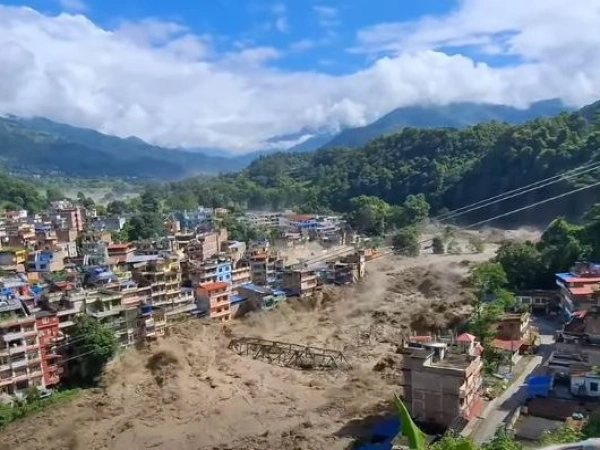
The Everest Base Camp Trek in Nepal remains unaffected by the recent catastrophic flash floods, with the trekking route and major access points continuing to operate normally. Whether you're a first-time trekker wondering, “Can I actually do this?” or an experienced hiker planning your next Himalayan adventure, this Everest Base Camp Trek 2026/27 guide covers the essentials: cost, itinerary, difficulty, fitness requirements, permits, best time to trek, packing list, accommodation, food, altitude, and everything else you should know before you go.
Everest Base Camp Trek 2026/27: Quick Facts
| Trek Detail | What to Expect |
| Destination | Everest Base Camp, Nepal |
| Region | Khumbu / Everest Region |
| Trek Duration | 12–14 trekking days |
| Recommended Trip Length | 14–16 days including Kathmandu & buffer days |
| Everest Base Camp Altitude | 5,364 m / 17,598 ft |
| Highest Point | Kala Patthar, around 5,545 m |
| Trek Difficulty | Challenging |
| Trek Style | Teahouse trekking |
| Starting Point | Lukla |
| Best Seasons | Spring & Autumn |
| Experience Required | No technical mountaineering experience |
The classic EBC route passes through Lukla, Phakding, Namche Bazaar, Tengboche, Dingboche, Lobuche, and Gorak Shep before reaching Everest Base Camp. Kala Patthar is usually the highest point of the trek and offers one of the best panoramic views of Everest.
How Much Does the Everest Base Camp Trek Cost in 2026/27?
The Everest Base Camp Trek cost depends on your group size, season, itinerary, accommodation, flights, and what's included in your trekking package.
For a standard 12–14-day guided EBC trek, a realistic 2026/27 planning range is approximately US$1,200–2,500+ per person. Budget group packages can sit toward the lower end, while private, premium, and luxury options can go considerably higher. Current published 2026/27 packages show this wide variation.
What You're Actually Paying For
A typical guided Everest Base Camp Trek package may include:
- Airport transfers in Kathmandu
- Kathmandu hotel accommodation
- Kathmandu–Lukla or Ramechhap–Lukla flights
- Licensed trekking guide
- Porter service
- Teahouse accommodation
- Meals during the trek
- Sagarmatha National Park entry
- Khumbu Pasang Lhamu Rural Municipality permit
- Government taxes and service charges
- Basic first-aid support
- Trekking map and/or duffel bag, depending on the operator
But don't assume everything is included just because a package says “all-inclusive.”
Extra Costs to Budget For
Keep some additional money aside for:
- International flights
- Nepal visa
- Travel insurance
- Emergency evacuation coverage
- Personal trekking equipment
- Snacks and drinks
- Wi-Fi
- Charging
- Hot showers
- Tips for guides and porters
- Additional accommodation caused by flight delays
- Personal expenses
A good rule: compare what's included, not just the headline price.
A US$1,200 package with major exclusions can end up costing more than a US$1,500 package that genuinely covers the essentials.
The Best Everest Base Camp Trek Itinerary
If you're asking us to choose one itinerary, we'd recommend a 14-day EBC itinerary for most trekkers.
Why?
Because Everest Base Camp isn't a race.
A sensible itinerary gives you enough time to acclimatize, enjoy the trail and reduce the temptation to rush through the Khumbu.
Here's the classic route:
Day 1: Kathmandu → Lukla → Phakding
Your Himalayan adventure begins with a flight toward Lukla.
From Lukla, you'll start walking through the lower Khumbu Valley toward Phakding.
Altitude: 2,610 m
Walking: 3–4 hours
Overnight: Phakding
Your first day is intentionally short. Think of it as your legs' introduction to the Himalayas.
Day 2: Phakding → Namche Bazaar
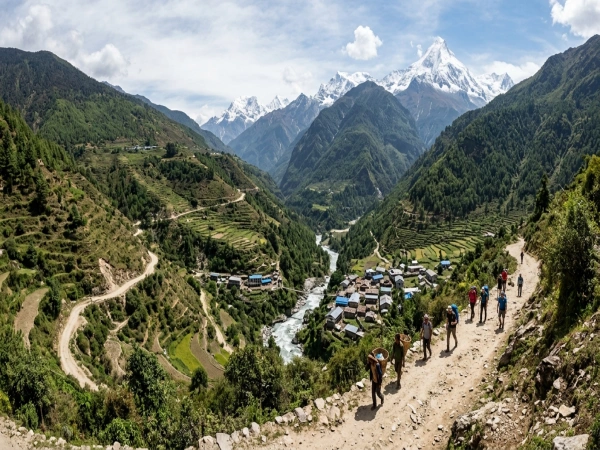
Today you'll enter Sagarmatha National Park and cross several suspension bridges over the Dudh Koshi River.
The trail gradually climbs toward Namche Bazaar, the bustling Sherpa town and major trading hub of the Khumbu.
Altitude: 3,440 m
Walking: 5–6 hours
Overnight: Namche Bazaar
And yes, there will be uphill sections.
Welcome to Everest.
Day 3: Acclimatization Day in Namche
No, you're not being lazy.
Acclimatization is part of the itinerary.
Spend the day exploring Namche and take a short hike to a higher elevation before returning to sleep at Namche.
You may visit the Everest View Hotel or explore the surrounding viewpoints.
Overnight: Namche Bazaar
Day 4: Namche → Tengboche
The trail continues through beautiful Himalayan terrain with spectacular views of Everest, Lhotse, Nuptse and Ama Dablam.
You'll reach Tengboche, home to the famous Tengboche Monastery.
Altitude: 3,860 m
Walking: 5–6 hours
Overnight: Tengboche
Day 5: Tengboche → Dingboche
The landscape begins changing noticeably as you gain altitude.
Trees become less dense, the air gets thinner, and the mountains feel much closer.
You'll reach Dingboche, one of the most important stops on the EBC route.
Altitude: Around 4,400 m
Walking: 5–6 hours
Overnight: Dingboche
Day 6: Acclimatization in Dingboche
Another rest day?
Absolutely.
This is one of the most important days of your Everest Base Camp itinerary.
A short hike toward a nearby viewpoint or higher elevation helps your body adapt before you climb further.
Overnight: Dingboche
Day 7: Dingboche → Lobuche
You'll continue toward the higher Khumbu Valley, passing through increasingly rugged landscapes.
The trail also passes the memorial area dedicated to climbers who lost their lives attempting Himalayan peaks.
Altitude: Around 4,900 m
Walking: 4–5 hours
Overnight: Lobuche
Day 8: Lobuche → Gorak Shep → Everest Base Camp
This is the day you've been waiting for.
You'll trek from Lobuche toward Gorak Shep before continuing to Everest Base Camp.
The trail becomes rocky and demanding, but the excitement usually takes over.
Finally:
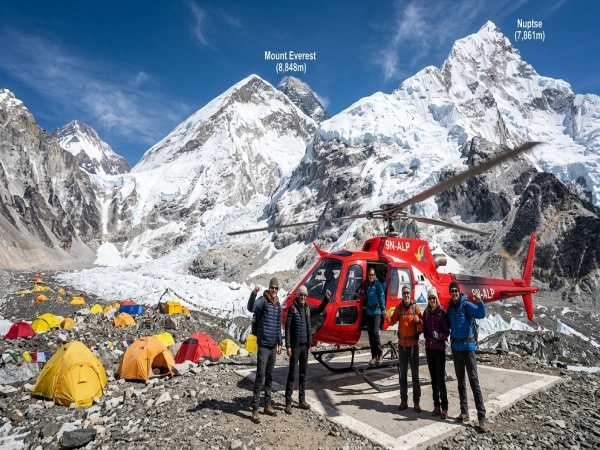
Everest Base Camp — 5,364 m.
Take it in. Take the photos. Enjoy the moment.
Then return to Gorak Shep for the night.
Walking: Approximately 6–8 hours
Overnight: Gorak Shep
Day 9: Kala Patthar Sunrise → Pheriche
Here's the plot twist:
Everest Base Camp isn't actually the highest point of the trek.
Wake up early and hike toward Kala Patthar, reaching approximately 5,545 m.
The reward?
One of the most spectacular sunrise views of Mount Everest and the surrounding Himalayan giants.
After sunrise, descend toward Pheriche.
Walking: Approximately 6–8 hours
Overnight: Pheriche
Day 10: Pheriche → Namche Bazaar
Now the altitude starts working in your favour.
You'll retrace the trail through the Khumbu Valley and descend toward Namche.
The air feels thicker.
Your legs feel happier.
Overnight: Namche Bazaar
Day 11: Namche → Lukla
Your final trekking day.
Enjoy the last views of the mountains, villages and suspension bridges before reaching Lukla.
Overnight: Lukla
Time for a well-earned celebration.
Day 12: Lukla → Kathmandu
Fly back to Kathmandu.
And if the mountain weather decides otherwise?
This is exactly why having a buffer day in your Nepal itinerary is smart.
Days 13–14: Buffer & Departure
Use these days for:
- Flight delays
- Rest
- Kathmandu sightseeing
- Shopping
- Contingency planning
- International departure
Pro tip: Don't schedule your international flight immediately after your Lukla flight if you can avoid it.
Mountain weather doesn't care about your flight itinerary.
How Difficult Is the Everest Base Camp Trek?
The Everest Base Camp Trek difficulty is generally considered challenging, but it isn't a technical climb.
You don't need to know how to use climbing ropes or crampons.
You do need to be prepared to walk for several hours a day at high altitude.
The biggest challenges are:
- Altitude
- Long walking days
- Steep ascents and descents
- Rocky terrain
- Cold temperatures
- Thin air
- Consecutive days of trekking
The trek becomes significantly more demanding above 4,000 m, which is why acclimatization is so important.
Everest Base Camp Trek Fitness Requirements
You don't need to be a marathon runner.
But you should have good cardiovascular endurance and leg strength before starting.
As a practical fitness benchmark, you should be comfortable completing approximately 5 km of brisk walking in 30 minutes without excessive strain.
If you prefer running, being able to jog around 10 km in 70 minutes is a useful endurance target.
Cyclists can use approximately 20 km in 55 minutes as another benchmark.
These aren't entrance exams for Everest. They're simply useful indicators that your cardiovascular fitness is heading in the right direction.
How Much Weight Should You Be Able to Carry?
If you're carrying your own backpack, train to comfortably handle approximately 10–12 kg.
If you've booked an off-load/porter option, your daypack can be much lighter—around 3–5 kg, containing only your daily essentials.
How Should You Train for EBC?
Ideally, start preparing 8–12 weeks before your trek.
Focus on:
Cardio:
Walking, jogging, cycling, stair climbing or hiking.
Leg strength:
Squats, lunges, step-ups and calf raises.
Endurance:
Gradually increase the length of your weekend hikes.
Elevation:
If possible, include uphill trails and stairs in your training.
And most importantly, don't train only on a treadmill.
The Himalayas have very few treadmills.
If your BMI is significantly outside the typical 18–26 range, discuss your planned trek with your trek coordinator before booking so the itinerary and preparation can be considered appropriately.
Altitude Sickness on the Everest Base Camp Trek
Altitude is the biggest factor that makes EBC different from an ordinary hiking trip.
Everest Base Camp sits at 5,364 m.
At this elevation, altitude sickness can affect anyone—regardless of age, gender or fitness level.
Common symptoms can include:
- Headache
- Dizziness
- Nausea
- Fatigue
- Loss of appetite
- Difficulty sleeping
That's why a good Everest Base Camp itinerary includes acclimatization days at Namche and Dingboche.
Remember:
Being physically fit does not make you immune to altitude sickness.
Tell your guide immediately if you develop concerning symptoms. Never try to hide symptoms just because you want to reach Base Camp.
The mountain will still be there.
What Is the Best Time for Everest Base Camp Trek?
The best time to trek to Everest Base Camp is generally during Nepal's spring and autumn trekking seasons.
🌸 Spring: March–May
Spring offers favourable trekking conditions, good visibility and warmer temperatures compared with winter.
April and May are particularly popular.
🍂 Autumn: September–November
Autumn is another excellent trekking season.
After the monsoon, skies are often clearer and mountain visibility can be spectacular.
October and November are among the busiest months on the trail.
❄️ Winter: December–February
Winter EBC trekking is possible, but temperatures can be extremely cold, especially at higher elevations.
🌧️ Monsoon: June–August
The Everest region can still be trekked during monsoon, but rain, cloud and transportation conditions can make the experience more unpredictable.
For most first-time trekkers, spring and autumn remain the safest choices for planning around weather and trail conditions.
What Permits Do You Need for Everest Base Camp?
Your Everest Base Camp Trek permits are generally handled by your trekking agency if you're travelling with a guide.
The main requirements include:
Sagarmatha National Park Entry Permit
The EBC trail passes through Sagarmatha National Park, a UNESCO World Heritage Site.
Khumbu Pasang Lhamu Rural Municipality Permit
This local permit is required for trekking in the Khumbu region.
Permit requirements and fees can change, so check the current requirements with your trekking operator before departure.
Everest Base Camp Trek Packing List
Packing for EBC is basically a game of:
“How do I stay warm without carrying my entire bedroom?”
Here's what you actually need.
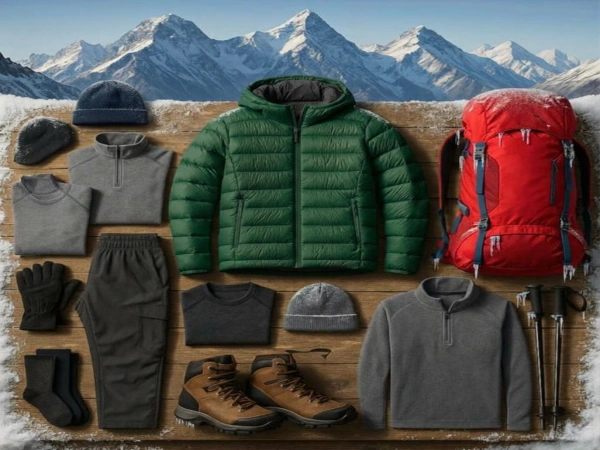
Clothing
- Moisture-wicking base layers
- Thermal underwear
- Fleece jacket
- Down jacket
- Waterproof/windproof jacket
- Trekking pants
- Warm hat
- Gloves
- Trekking socks
Footwear
- Broken-in trekking boots
- Comfortable camp shoes
- Extra hiking socks
Gear
- Daypack
- Duffel bag
- Sleeping bag
- Trekking poles
- Headlamp
- Water bottles
- Sunglasses
- Sunscreen
- Lip balm
Personal Essentials
- Passport
- Travel insurance documents
- Personal medication
- Basic first-aid items
- Power bank
- Phone/camera
- Universal adapter
- Nepali rupees
Don't bring everything you own.
You'll appreciate every gram you leave behind.
What Is Accommodation Like on the EBC Trek?
The Everest Base Camp Trek is a teahouse trek.
Most nights are spent in simple mountain lodges with basic rooms, usually featuring twin beds.
Bathrooms may be shared, particularly at higher elevations.
The higher you go, the more basic the facilities become—and the more expensive extras such as hot showers, charging and Wi-Fi can get.
But that's part of the experience.
You're not going to Everest for room service.
You're going for the mountains.
What Food Can You Eat During the Everest Base Camp Trek?
You might be surprised by how much food is available along the EBC route.
Common meals include:
- Dal bhat
- Momo
- Thukpa
- Fried rice
- Noodles
- Pasta
- Soup
- Eggs
- Pancakes
- Porridge
- Potatoes
- Tibetan bread
And yes, dal bhat is your trekking best friend.
It's filling, familiar, relatively affordable and provides plenty of energy for long trekking days.
Stay hydrated, eat regularly and don't underestimate how much food you'll need when you're walking for hours every day.
Can Beginners Do the Everest Base Camp Trek?
Yes.
You don't need previous high-altitude trekking experience or technical climbing skills.
But you should not underestimate the trek simply because it's non-technical.
A beginner should:
- Start training before the trip
- Choose an itinerary with proper acclimatization
- Walk regularly before departure
- Break in trekking boots
- Learn the symptoms of altitude sickness
- Follow the pace recommended by the guide
- Stay hydrated
- Be prepared for basic mountain facilities
Your first Himalayan trek doesn't have to be your hardest possible trek.
A well-planned EBC itinerary makes a huge difference.
Should You Hire a Guide and Porter for Everest Base Camp?
For most trekkers, yes.
A licensed guide can help with:
- Route navigation
- Acclimatization
- Daily pacing
- Accommodation
- Local logistics
- Emergencies
- Communication
A porter can carry the majority of your luggage, allowing you to enjoy the trail with a lighter daypack.
And there's another benefit:
You're supporting local employment in the Himalayan trekking economy.
Is the Everest Base Camp Trek Worth It?
Let's put the Instagram photo aside for a second.
The real magic of the Everest Base Camp Trek isn't just reaching the famous Base Camp sign.
It's the journey.
It's walking through Sherpa villages.
It's crossing suspension bridges over rushing rivers.
It's drinking tea in Namche.
It's seeing Ama Dablam appear between the clouds.
It's hearing prayers around a monastery.
It's walking above 5,000 metres and realizing just how enormous the Himalayas really are.
And eventually standing at Everest Base Camp at 5,364 metres.
That's the part you'll remember.
Why Trek to Everest Base Camp with Nepal Horizons Trek?
Planning an Everest Base Camp Trek involves much more than booking a flight to Lukla.
Your itinerary needs to account for altitude, acclimatization, accommodation, permits, transportation, weather, and safety.
With a local trekking company, you also have people on the ground who understand the route and can help adapt plans when mountain conditions change.
At Nepal Horizons Trek, our goal is to make your Everest adventure well-organized, safe and memorable from your arrival in Kathmandu to the moment you return from the Khumbu.
Whether you're looking for a group Everest Base Camp Trek, private EBC trek or customized Nepal trekking itinerary, we can help you plan the journey around your schedule, experience and preferences.
Ready to see Everest up close?
Your Himalayan adventure starts long before you reach Base Camp.
Start planning your Everest Base Camp Trek 2026/27 with Nepal Horizons Trek.
Everest Base Camp Trek 2026/27: FAQs
How much does the Everest Base Camp Trek cost?
A guided 12–14 day EBC trek can realistically range from around US$1,200 to US$2,500+, depending on services, group size, accommodation and season.
How many days do you need for Everest Base Camp?
A classic trek takes approximately 12–14 trekking days. Allowing 14–16 days overall gives you additional time for Kathmandu and potential flight delays.
What is the Everest Base Camp altitude?
Everest Base Camp is approximately 5,364 metres (17,598 feet) above sea level.
What is the highest point of the EBC Trek?
Kala Patthar is generally the highest point on the classic itinerary, at approximately 5,545 metres.
Is Everest Base Camp Trek difficult?
It is a challenging high-altitude trek. It doesn't require technical climbing skills, but you need good stamina, preparation and proper acclimatization.
What is the best month to trek to Everest Base Camp?
March–May and September–November are the main trekking seasons, with spring and autumn generally offering the most favourable conditions.
Can a beginner trek to Everest Base Camp?
Yes. Beginners can complete the EBC trek with proper preparation, a sensible itinerary, acclimatization and experienced guide support.
Do I need a guide for Everest Base Camp?
A guide is highly recommended for navigation, logistics, acclimatization and safety, particularly for first-time trekkers.
What should I pack for Everest Base Camp?
Warm layers, waterproof clothing, good trekking boots, a sleeping bag, trekking poles, sunglasses, sunscreen, personal medication and essential documents are among the key items.
Ready to Trek to Everest Base Camp?
The Everest Base Camp Trek is more than reaching 5,364 meters—it’s an unforgettable journey through the heart of the Himalayas, surrounded by Sherpa culture, dramatic mountain landscapes, and some of the world’s highest peaks.
Whether you’re a first-time trekker or an experienced adventurer, the right itinerary, acclimatization plan, local support, and preparation can make your EBC journey safer and more enjoyable.
Ready to start planning your Everest Base Camp Trek 2026/27?
Let Nepal Horizons Trek help you plan the journey with experienced local guides, carefully designed itineraries, and flexible options for group, private, and customized Everest Base Camp treks.
👉 Contact Nepal Horizons Trek today and start planning your adventure to Everest Base Camp.