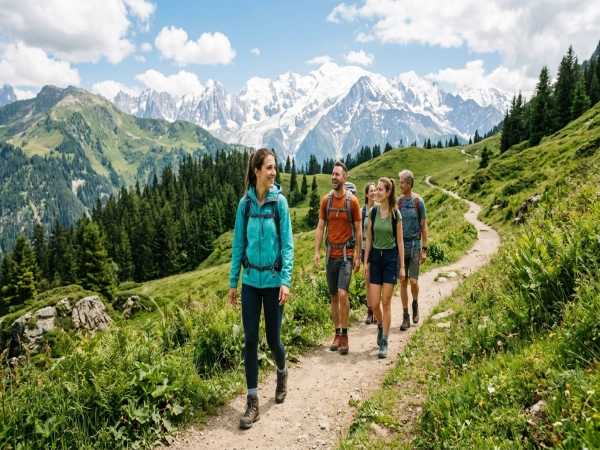


October is when Nepal starts feeling like trekking season again.
The monsoon clouds begin to clear, mountain views return, trails become lively, teahouses fill with trekkers, and the Himalayas start looking exactly like the pictures that made you want to visit Nepal in the first place.
If you are thinking about trekking in Nepal in October 2026, you are choosing one of the most popular times of the year to walk through the Himalayas.
But there is more to October trekking than simply having “good weather.”
You also need to think about crowds, accommodation, trekking costs, permits, route conditions, altitude and what you actually want from the experience.
So, what is October really like on the trails?
Let’s get into it.
Why October Is Such a Big Deal for Trekking in Nepal
Nepal has several trekking seasons, but autumn is one of the most sought-after.
After the monsoon season, the atmosphere generally becomes clearer and mountain visibility improves. Nepal Tourism Board describes October and November as months with some of the clearest skies of the year, while September to November is generally considered a strong trekking period.
And October brings something else:
Energy.
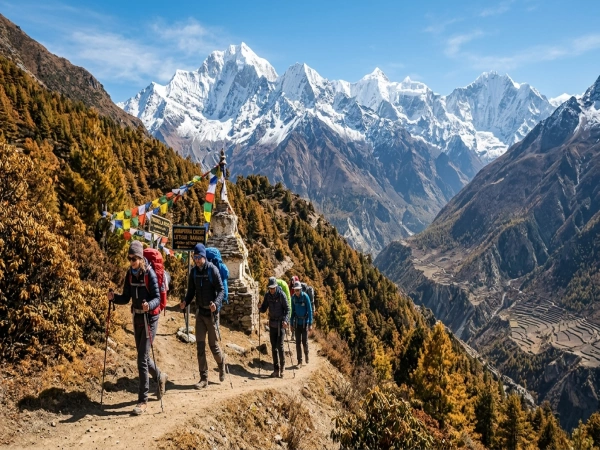
The trails are no longer quiet like they can be during the monsoon. You will see trekkers from all over the world walking the same paths, tea houses buzzing with conversations, porters carrying supplies uphill, prayer flags moving in the mountain wind and villages preparing for one of their busiest periods of the year.
For many people, that atmosphere is part of the adventure.
What Is the Weather Like in Nepal in October?
October marks the transition from monsoon to the drier autumn season.
In the higher mountains, daytime conditions are generally suitable for trekking, while mornings and nights become noticeably colder as you gain elevation.
And there is one important thing to remember:
Nepal does not have one single “October temperature.”
A trek through the lower hills feels completely different from standing above 4,000 metres.
Nepal Tourism Board notes that temperatures generally fall by around 6°C for every 1,000 metres of elevation gained, so the temperature difference between Kathmandu, a mid-hill village and a high-altitude camp can be significant.
That means your October packing list should include both:
light trekking clothes for sunny afternoons + proper warm layers for high-altitude mornings and nights.
The sky is the real attraction
One of the biggest reasons trekkers choose October is visibility.
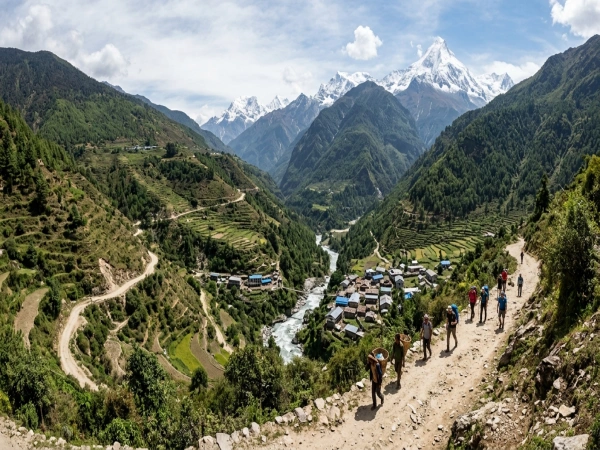
After the monsoon, the landscape can look dramatically different. Forests are green, waterfalls are still flowing, and the skies can open up to huge Himalayan views.
On a clear morning, you might walk around a bend and suddenly have a wall of snow-covered peaks in front of you.
That is the October experience people come to Nepal for.
So… Is October Crowded?
Yes.
But “crowded” does not necessarily mean unpleasant.
October is peak trekking season, so popular routes such as Everest Base Camp and the Annapurna region can become busy.
You are likely to encounter more trekkers on the main trails, and popular tea houses can fill quickly.
There is also a social side to this.
If you enjoy meeting people while travelling, October can actually be fun. You may start the morning with strangers and end the day sharing dinner, stories and a game of cards with people you met on the trail.
If you prefer solitude, however, you may want to consider quieter routes or less busy variations.
The trick is not necessarily avoiding October — it is choosing the right trail for the kind of experience you want.
Which Treks Work Well in October?
There is no single “best trek” for everyone.
Your ideal October trek depends on how much time you have, how comfortable you are with altitude, how physically demanding you want the trip to be and whether you want famous Himalayan landmarks or quieter trails.
Everest Base Camp
If seeing Mount Everest is high on your bucket list, October is one of the classic months for the Everest region.
The Everest region is officially listed by Nepal Tourism Board as having October–November among its best trekking seasons.
The journey takes you through the Khumbu region, with highlights including Namche Bazaar, Tengboche, Dingboche, Gorakshep and Everest Base Camp.
And then there is Kala Patthar.
Wake up early, walk into the cold mountain air and watch the first light hit Everest and the surrounding peaks.
That is one sunrise you are unlikely to forget.
Best for: first-time Himalayan trekkers, Everest bucket-list travellers and people who want the iconic Nepal trekking experience.
Annapurna Circuit
Want variety?
The Annapurna Circuit gives you plenty of it.
The landscape changes dramatically as you move through the region — from green hills and villages to high mountain terrain and the dramatic landscapes around Manang and Mustang.
Nepal Tourism Board describes the Annapurna region as one of Nepal's most diverse trekking areas, ranging from short treks to longer journeys around the Annapurna massif.
October is particularly attractive because the post-monsoon conditions can make the mountain scenery spectacular.
Best for: travellers who want changing landscapes, culture, mountain views and a longer Himalayan adventure.
Annapurna Base Camp
Not everyone has two or three weeks for a trek.
That is where Annapurna Base Camp becomes interesting.
The trek takes you into the heart of the Annapurna Sanctuary without requiring the same length of commitment as some of Nepal's longer circuits.
You get forests, traditional villages, suspension bridges and increasingly dramatic mountain views as you climb.
And eventually:
Annapurna Base Camp.
Surrounded by mountains.
Best for: travellers who want a Himalayan experience without committing to an extremely long trek.
Manaslu Circuit: The Adventure With a Little More Wildness
Manaslu has become increasingly popular with trekkers looking for something beyond the busiest classic routes.
The Manaslu Conservation Area lists September–November among its best seasons.
The route takes you through changing landscapes, traditional villages and increasingly high Himalayan terrain before crossing the Larkya La area.
But there is an important 2026 consideration.
Because some trekking infrastructure and access routes in Nepal have been affected by recent weather events, travellers should check the latest local route conditions before departure rather than relying only on older itineraries.
Best for: experienced trekkers and travellers looking for a more remote-feeling Himalayan journey.
What About Langtang in October 2026?
Normally, Langtang is an excellent October option.
Nepal Tourism Board lists October–November as one of the best seasons for Langtang National Park.
But 2026 is not a year to plan Langtang blindly.
Recent flooding and infrastructure damage in parts of the Rasuwa and Bhotekoshi/Trishuli corridor mean access conditions should be checked before travelling.
This matters because Langtang is not simply “one trail.” Access through the lower Rasuwa corridor can affect several trekking plans, including Langtang Valley and other routes in the wider region.
So if Langtang is on your October itinerary:
Check the current road, bridge and trail situation with your trekking agency before you leave Kathmandu.
The season may be right.
The route still needs to be right.
How Much Does an October Trek in Nepal Cost?
This is where things get interesting.
There is no single price for “a Nepal trek.”
Your total cost depends on:
- Which trek you choose
- Number of trekking days
- Guide and porter services
- Accommodation
- Meals
- Permits and entry fees
- Domestic flights or transportation
- Your trekking agency
- Whether you choose a private or group departure
- Extra hotel nights in Kathmandu or Pokhara
And October can be more expensive than quieter months simply because demand is higher.
For example, popular flights and accommodation can become harder to arrange close to departure.
Booking earlier can give you more choice.
For an exact 2026 price, however, always check the current package rather than relying on an old blog post or a random online price.
What Will You Actually Spend Money On?
Think of your trek as having two types of costs.
The costs you plan for
Your trekking package, accommodation, transportation, permits, guide and meals.
The costs that sneak up on you
- Hot showers.
- Snacks.
- Charging your phone.
- Extra drinks.
- Wi-Fi.
- Tips.
A random chocolate bar at 4,000 metres because suddenly it feels like the most important chocolate bar of your life.
These small expenses can add up.
So keep some extra Nepalese rupees with you, especially once you are away from major cities.
What Should You Pack for October?
October does not mean you need to bring your entire winter wardrobe.
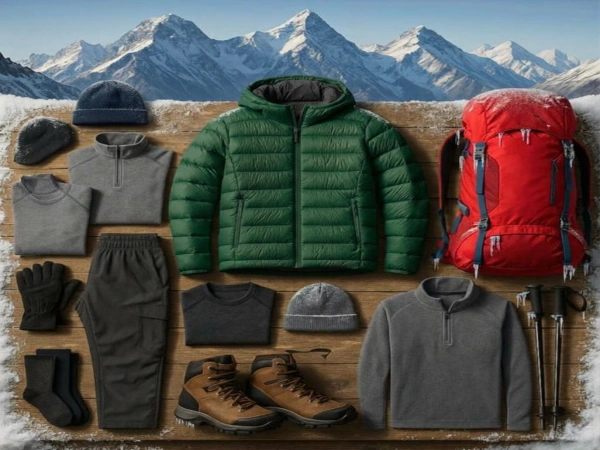
Think layers rather than one giant jacket.
A typical October trekking wardrobe might include:
Base layer → T-shirt → fleece → down jacket → waterproof outer layer
You should also bring proper trekking shoes, warm socks, gloves, a hat, sunglasses and sun protection.
At higher elevations, the sun can feel surprisingly strong even when the air is freezing.
And please do not underestimate the importance of a good pair of socks.
Your feet are going to be doing most of the work.
October Trekking and Altitude: Don't Let Good Weather Fool You
Clear skies do not mean altitude is easy.
Some of Nepal's most popular treks reach elevations where your body needs time to adjust.
Everest Base Camp, for example, involves significant altitude gain, which is why acclimatization days are built into responsible itineraries.
You may feel completely fine at a lower elevation and then notice the difference as you climb higher.
The rule is simple:
Take altitude seriously.
Walk at a comfortable pace, stay hydrated, follow your guide's advice and allow enough time for acclimatization.
If you develop symptoms of altitude illness, tell your guide immediately.
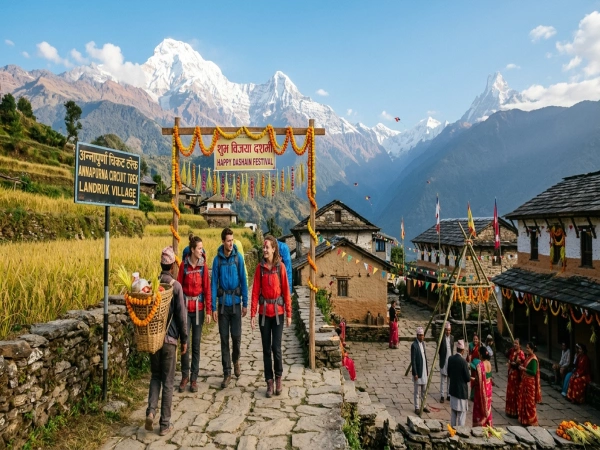
What Is October Like During Dashain?
October 2026 is particularly interesting for travellers because Nepal's biggest festival season falls around this period.
Dashain is celebrated across Nepal, and the country can feel different during major festival days.
You may see families travelling, markets becoming busier and people returning to their hometowns to celebrate.
For travellers, this can add a completely different cultural layer to an October trip.
But it can also affect transportation, business hours and travel arrangements around particular festival dates.
So if your trek overlaps with Dashain:
check transportation and accommodation arrangements in advance.
And if you are lucky enough to be invited into a local celebration, be respectful, curious and open to experiencing Nepal beyond the trekking trail.
October vs November: Which One Should You Choose?
Both are excellent autumn trekking months, but they can feel slightly different.
October tends to have a lively peak-season atmosphere, with plenty of trekkers on the popular routes.
November moves closer toward winter, particularly at higher elevations, but can still offer excellent trekking conditions and clear mountain views.
If you want the classic busy-season trekking atmosphere, October is a natural choice.
If you prefer slightly later-season travel and are comfortable with colder conditions, November can also be an excellent option.
Ultimately, your route matters just as much as your month.
The One Thing You Should Do Before Booking Your October Trek
Don't choose a trek just because someone called it the “best trek in Nepal.”
Ask yourself:
What do I actually want from this trip?
Do you want Everest?
A high mountain pass?
A shorter adventure?
Remote villages?
Beautiful landscapes?
A cultural experience?
A challenge?
Or simply a few days away from city life with the Himalayas in front of you?
Once you know that, choosing the route becomes much easier.
Ready for the Himalayas?
October is one of the most exciting times to trek in Nepal.
The skies begin to clear. The mountains come into view. The trails become lively. Villages welcome trekkers. After months of monsoon, the Himalayas finally feel ready to explore.
But good trekking is not just about choosing the right month.
It is about choosing the right route, itinerary, and preparation for you.
At Nepal Horizons Treks, our team can help you choose a trek based on your available time, experience, fitness level, and travel preferences — and help you plan the logistics from Kathmandu to the trail and back.
Your October adventure starts long before your first step on the trail.
Let’s plan it properly.